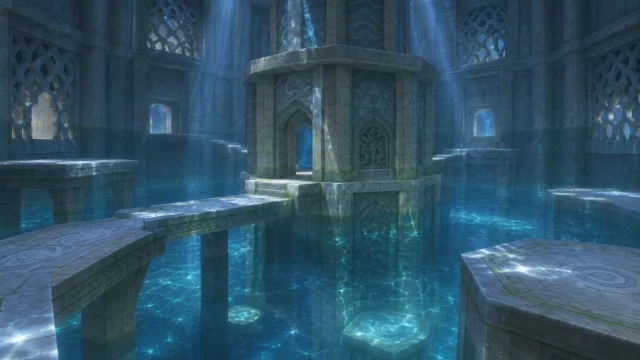
Getting lost in a Zelda dungeon can be part of the adventure. Getting lost because every corridor looks alike is another matter. That distinction sits at the heart of the Zelda Water Temple fix coming to The Legend of Zelda: Ocarina of Time on Nintendo Switch 2. Nintendo has confirmed changes designed to address one of the most frustrating aspects of its 1998 classic, just two days before the remake launches on November 5, 2026.
Rather than removing the challenge, Nintendo wants players to understand their surroundings without constantly fighting the interface. It is an important difference, especially for a dungeon whose reputation has followed Ocarina of Time for nearly three decades.
Why the Water Temple became Zelda’s most frustrating maze
The original Water Temple was not infamous simply because its puzzles were difficult. Its real challenge came from combining several demanding mechanics inside a complicated underwater environment. Players had to navigate multiple floors, manipulate water levels and repeatedly reconsider which passages were accessible.
Meanwhile, the Iron Boots introduced an additional layer of inconvenience. Moving between swimming and walking underwater required frequent equipment changes through the inventory. Every interruption made it easier to forget which room you had just explored or where you intended to go next. The dungeon tested patience and spatial memory as much as puzzle-solving ability.
There was, however, a creative reason behind that design. Zelda producer Eiji Aonuma, who originally built the dungeon 28 years ago, wanted underwater exploration to feel like entering another world. As someone who enjoys freediving, he was fascinated by the altered sounds and unusual sense of space beneath the surface. At a time when relatively few 3D adventures allowed players to dive, that ambition was especially unusual.
The Zelda Water Temple fix changes how players read each room
Nintendo has now identified two specific improvements. In the third part of its Ask the Developer Vol. 24 interview, published on November 3, director HokWai Ng explained that switching between items is considerably easier in the new version. That should reduce interruptions during underwater exploration, allowing players to concentrate on their surroundings instead of repeatedly opening menus.
The second adjustment is more interesting from a level-design perspective. Some solid walls that previously obscured nearby areas have been replaced with lattice-style structures. Players can therefore look through these barriers and see adjoining rooms, making it easier to recognize how different spaces connect.
This seemingly modest change could make a substantial difference. A player who recognizes a familiar room beyond a barrier gains a useful reference point, even without opening a map. Instead of memorizing every turn, they can gradually build a mental picture of the dungeon. Importantly, Nintendo says the original dungeon mechanisms have largely been preserved.
Why the 2011 Nintendo 3DS remake did not end the debate
This is not the first attempt to improve the Water Temple. Ocarina of Time 3D, released for Nintendo 3DS in 2011, already addressed several longstanding complaints. Among its most welcome adjustments was making the Iron Boots easier to equip, while visual guidance helped players understand important routes through the dungeon.
Nevertheless, those improvements did not completely erase the challenge of navigating a complex, interconnected space. The Switch 2 remake approaches that problem from another direction. Rather than relying only on more convenient controls or additional visual guidance, Nintendo is changing what players can actually see through the environment.
That approach fits a broader philosophy behind this remake. As Battle4Play previously covered in its coverage of Ocarina of Time’s rejected extra warp points, the developers have been careful about which conveniences should be introduced. Additional warp points were tested and ultimately discarded because they undermined parts of the original exploration experience.
The contrast is revealing. Nintendo is willing to remove unnecessary friction, yet it does not want every obstacle to disappear. Improving visibility inside the Water Temple helps players interpret an existing challenge. Adding shortcuts throughout Hyrule, by comparison, could change how they experience the journey itself.
What returning players and newcomers should expect on November 5
For longtime fans, the most interesting question is whether the redesigned dungeon will still demand careful observation. The confirmed changes suggest that water-level puzzles and the broader dungeon structure remain central to the experience. However, the frustrating process of repeatedly losing your bearings should become less common.
Newcomers may benefit even more. Players familiar with Breath of the Wild or Tears of the Kingdom are accustomed to greater camera freedom and more immediate controls. Nintendo’s remake has been developed with those expectations in mind, including changes to movement and camera handling. Consequently, clearer dungeon layouts should complement a more modern approach to exploration.
There is also a personal dimension to these improvements. Aonuma described revisiting his old Water Temple design as unfinished business. After nearly three decades, he finally has an opportunity to address problems that emerged from the limitations and experimentation of early 3D game development.
Still, Nintendo has not promised that the Water Temple will become easy. Nor has it confirmed a complete redesign of its puzzles. The true measure of success will be whether players spend more time solving problems and less time wondering where they are. That distinction can only be properly evaluated once the finished game is available.
The Legend of Zelda: Ocarina of Time launches exclusively on Nintendo Switch 2 on November 5, 2026, developed by Nintendo’s internal Zelda team, with Eiji Aonuma as producer and HokWai Ng as director. Nintendo previously highlighted eight major improvements in a dedicated video, while its latest developer interviews have provided further insight into the remake’s design decisions. Battle4Play has also examined the key features and improvements coming to Ocarina of Time on Switch 2.
Ultimately, the Zelda Water Temple fix could become one of the remake’s most meaningful improvements precisely because it does not need to transform the dungeon completely. Making an old challenge easier to understand is different from making it easier to beat. Will returning players finally enjoy exploring this underwater labyrinth, or will they miss the confusion that made it legendary?
Source: Nintendo — Ask the Developer Vol. 24, Part 3 (November 3, 2026).

Creator of the website, Pokemon trainer by nature. Trying to report on everything related to the world of video games, series and movies. Yu-Gi-Oh is my weakness, collecting cards since the dawn of time.