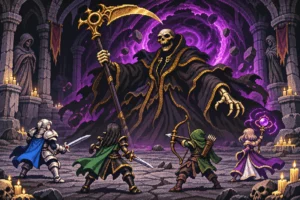
Most free games eventually ask players to spend money on something. Last Gambit is taking a different route: it is giving early players permanent ownership before introducing a single purchase price. However, that opportunity has an expiration date.
The Last Gambit free Steam offer ends on November 13, 2026. Until then, players can add this unusual chess-inspired roguelite to their libraries at no cost. Anyone who does so before the deadline will retain access forever, including future updates. There are no subscriptions or additional payments required.
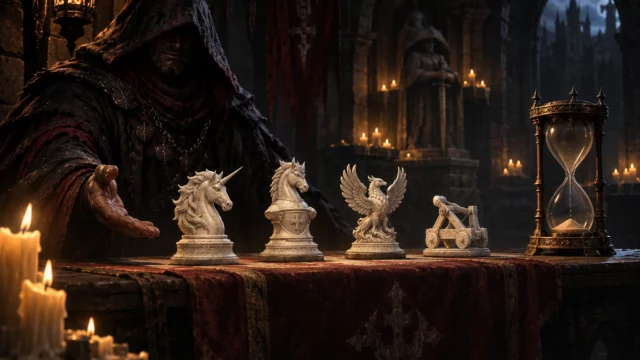
Behind this limited opportunity is a surprisingly ambitious strategy game where traditional chess pieces share the board with mythical creatures, siege weapons and abilities that can overturn familiar rules.
Last Gambit free Steam access: how to keep the game permanently
Independent developer Mads confirmed the change in an October 30 announcement. Last Gambit entered Steam Early Access on August 27, 2026, and its full version 1.0 is scheduled for November 13.
From that date, new players will pay €4.99 or the equivalent regional price. However, existing owners will not be charged. The developer has explicitly confirmed that keeping the game requires no additional action once it is in your library.
This makes the current offer particularly interesting. Unlike a temporary free weekend, the deadline does not determine how long you can play. Instead, it determines whether you need to buy the game at all.
To secure access, visit the official Last Gambit Steam page and add the free game to your account before November 13.
The title supports Windows, macOS and Linux. Consequently, the offer is not restricted to a single desktop operating system.
Chess becomes unpredictable when you build your own army
Last Gambit keeps the strategic foundations of chess but changes one of its most recognizable traditions: the starting army. Rather than receiving a predetermined collection of pieces, players assemble their own forces and choose where to deploy them.
There are 27 different pieces, including the six classical types. The rest introduce abilities that would be impossible in an ordinary chess match.
The Void Queen, for example, can travel beyond one edge of the board and reappear on the opposite side. Meanwhile, the Phoenix can return after being defeated. Catapults and Trebuchets offer another unusual possibility by launching friendly pieces across the battlefield.
Other additions include the Unicorn, Griffon, Summoner and Mirror. However, players do not immediately receive the complete collection. New pieces are discovered through boss battles, difficult victories, trophies and experiments in the Laboratory.
Furthermore, pieces can be fused into stronger units, cloned or upgraded during combat. Even pawns can evolve while a battle is underway.
These mechanics create an important distinction from traditional chess. Knowing how a knight or queen moves is useful, but understanding how different abilities interact becomes equally important.
For players who enjoy unusual tactical systems, this experimental approach has something in common with the difficult decisions found in Darkest Dungeon II’s roguelike combat. Both reward preparation, although Last Gambit focuses on constructing armies rather than managing a traveling party of heroes.
A roguelite campaign that connects solo and multiplayer battles
The Story mode introduces a branching map filled with battles, merchants and bosses. Every journey offers opportunities to strengthen your army, discover pieces and acquire perks that fundamentally alter combat.
Some perks allow players to rewind a move. Others can freeze a piece, teleport pieces or revive fallen units. As a result, strategies that initially seem impossible can become viable during a particularly fortunate run.
However, the campaign has an unusual social element. Players exploring the same generated seed can appear on each other’s maps. They can exchange pieces and perks through the Barter system or challenge one another directly.
Even offline opponents can leave a presence behind through ghost battles. This gives the campaign an asynchronous competitive dimension without requiring everyone to be connected simultaneously.
Competitive multiplayer offers two army-building formats. In Fixed matches, both opponents receive the same randomly selected pool of pieces. Each bans one option before building a formation from the remaining choices.
Budget matches work differently. Every piece carries a points cost, forcing players to decide between a smaller elite force and a larger collection of affordable units.
Matchmaking considers rating, time controls and perk preferences. Online 2v2 battles are also available, alongside computer opponents, offline play and local matches for two people sharing a screen.
This mixture of preparation and unconventional combat recalls the broader appeal of Resonance of Fate’s distinctive tactical battles, where positioning and planning matter as much as individual attacks.
Last Gambit adds long-term goals through more than 40 trophies, collectible perks, fusion recipes, weekly objectives and a Career mode featuring statistics and ranks.
Why a small developer is abandoning the free model
The upcoming price is not being introduced alongside an in-game store. According to Mads, the intention is precisely the opposite.
The developer wants to avoid advertising, subscriptions, pay-to-win mechanics and paid individual pieces. Instead, the €4.99 purchase is intended to support ongoing development and the game’s own cross-platform multiplayer servers.
That distinction matters for a strategy title where access to different units can influence competitive possibilities. Selling powerful pieces separately could create concerns about fairness. A one-time purchase offers a simpler alternative, although the game’s long-term sustainability remains to be seen.
The latest update already reflects continued development. Several interface screens are clearer, new animations have been added, and performance has become smoother and more stable. Special trait moves can now be armed by double-tapping the relevant piece.
That is particularly important for a game containing so many unconventional abilities and possible combinations.
Nevertheless, its reception remains difficult to judge. Steam currently lists only nine user reviews, which is insufficient to generate an overall rating. Therefore, it would be premature to describe Last Gambit as an established indie success.
The real test will come after launch, when the developer must balance its growing collection of mechanics while maintaining enough multiplayer activity to support matchmaking.
For now, the Last Gambit free Steam opportunity offers a low-risk way to discover an inventive strategy game before its premium release. November 13 marks both the end of Early Access and the end of free access for newcomers. Will its unusual approach to chess be enough to build a lasting competitive community?

Creator of the website, Pokemon trainer by nature. Trying to report on everything related to the world of video games, series and movies. Yu-Gi-Oh is my weakness, collecting cards since the dawn of time.