In most card-based roguelikes, a bad draw can ruin an otherwise promising strategy. HARMA roguelike deckbuilder takes a different approach: it allows players to interfere with randomness rather than simply accept their fate. That distinction could become its greatest strength when the dark fantasy RPG enters Steam Early Access on November 17, 2026.
Developed by INDIRECT SHINE and published by Astrolabe Games, HARMA combines pixel-art visuals, a narrative campaign and strategic card battles. Moreover, its initial Early Access release promises more than 200 hours of content and online cooperative play for up to four players. Yet its most interesting feature might be a resource called Focus.
HARMA roguelike deckbuilder makes luck a tactical decision
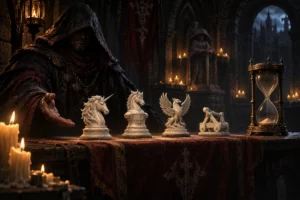
Randomness is fundamental to the roguelike genre. Unexpected combinations, difficult encounters and unpredictable outcomes encourage players to adapt. However, HARMA introduces an unusual way to influence those outcomes through three powerful artifacts.
During combat, the strength of your cards depends on which artifacts activate randomly. Consequently, even a carefully constructed deck can produce different results from one battle to another. Focus changes that relationship by allowing players to trigger artifact activations deliberately.
The decision sounds straightforward until resources become limited. Spending Focus could provide enough power to defeat a dangerous enemy immediately. Saving it, however, might leave you better prepared for an even harder encounter. Every activation therefore creates a choice between immediate safety and future flexibility.
This is where HARMA could distinguish itself from familiar deckbuilding experiences such as Slay the Spire or Balatro. Rather than relying entirely on the cards available, players must also decide when manipulating probability is worth the cost. Whether that system remains satisfying across hundreds of battles will depend heavily on balancing.
A fallen kingdom gives every card battle a darker purpose
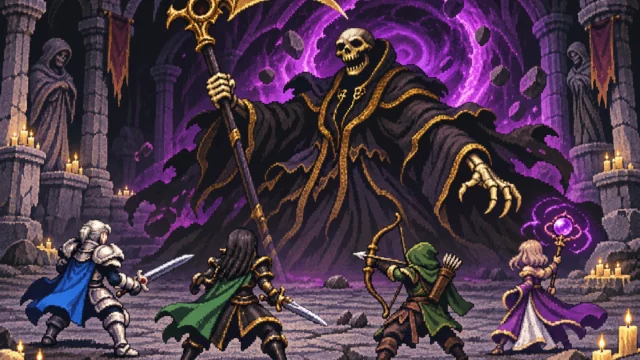
HARMA is not exclusively interested in endless combat. Its story begins with a horrifying betrayal: knights returning from an expedition suddenly turn against their own people. Their attacks leave the kingdom burning, while the protagonist’s father disappears amid the destruction.
Alone at the center of this catastrophe, the hero must investigate what happened to the fallen knights. Demons stand in the way, and mysterious artifacts become essential weapons against the spreading darkness.
The narrative unfolds across four acts featuring branching dialogue, cinematic cutscenes and dynamic battles. Along the way, players uncover the fate of Eden, a world devastated by violence and unanswered questions.
This storytelling approach gives HARMA another potential advantage. Instead of treating every encounter as an isolated challenge, the campaign can provide emotional reasons to continue. The mystery surrounding the missing father and corrupted knights may prove just as important as finding the strongest deck.
Its gloomy atmosphere also recalls the appeal of difficult fantasy adventures such as HeroQuest Digital Edition and its cooperative dungeon exploration. Although their combat systems differ considerably, both demonstrate how fantasy settings can support tactical decisions and shared adventures.
Four-player co-op and 300 cards could transform replayability
One of the more ambitious promises concerns the amount of content available immediately. INDIRECT SHINE expects HARMA to offer over 200 hours of gameplay from its Early Access debut, alongside online cooperation for groups of up to four players.
The game also features two playable characters and more than 300 unique cards and artifacts. These elements provide the foundation for experimenting with different decks, combinations and combat strategies.
Of course, a large card collection does not automatically guarantee strategic depth. What matters is whether different combinations encourage genuinely different decisions. HARMA’s artifact system could help achieve that by making the timing of special activations as important as deck composition.
For players who prefer mechanical challenges over dialogue, there is another option. Dimensional Rift removes the campaign’s storytelling and concentrates on endlessly replayable encounters. Battles change between attempts, encouraging experimentation and testing how far a particular build can survive.
That distinction is important. The campaign provides a defined narrative journey, while Dimensional Rift offers a place to refine strategies without repeatedly following the same story sequences.
It also places HARMA within a growing selection of unusual roguelikes built around experimentation. For example, Nubby’s Number Factory uses increasingly elaborate combinations to turn simple mechanics into demanding challenges. HARMA approaches replayability through cards, artifacts and resource management instead.
What to expect from HARMA Early Access on Steam
HARMA’s Early Access release is scheduled for November 17, 2026, on Windows PC through Steam, according to the announcement from INDIRECT SHINE and Astrolabe Games. However, the Steam storefront currently displays November 16, so players should check their regional listing before launch.
The developers are planning a long-term development period with new content, regular balance adjustments and improvements based on community feedback. A detailed roadmap is expected to arrive on launch day, offering a clearer picture of what comes next.
According to the Early Access information, additional characters, bosses, cards, skills, artifacts and modes are among the areas planned for expansion. The studio also intends to use player feedback to improve stability and refine combat balance.
Anyone interested in trying the game beforehand can already download its free Steam demo. The trial appeared during October’s Steam Next Fest with two-player online cooperation, and an October 20 update introduced Act 2. This offers a useful opportunity to explore the combat system before committing to the Early Access version.
There are still practical details to consider. No launch price has been announced, although the developers indicate that the price is expected to increase when the full version arrives. Steam currently lists English, Japanese, Korean, Simplified Chinese and Traditional Chinese. Spanish localization has not been confirmed.
Players can find the demo, supported languages and upcoming release information on the official HARMA Steam page.
Ultimately, the appeal of HARMA roguelike deckbuilder goes beyond its enormous content promise. Its real test will be whether controlling artifact randomness creates meaningful decisions throughout an extended campaign and repeated Dimensional Rift runs. If that balance works, HARMA could become an intriguing alternative for players who enjoy challenging card games but want more influence over their own luck.

Creator of the website, Pokemon trainer by nature. Trying to report on everything related to the world of video games, series and movies. Yu-Gi-Oh is my weakness, collecting cards since the dawn of time.