World of Warcraft has spent more than two decades building its identity around persistent characters, equipment and long-term progression. However, the WoW Talebound free demo offers something remarkably different: a dark fantasy adventure where individual runs matter more than maintaining a traditional MMORPG routine.
Starting Friday, October 30, and ending Sunday, November 1, 2026, Blizzard is letting players experience this new mode through the Midnight patch 12.1.7 Public Test Realm. Better still, an active World of Warcraft subscription is not required.
Why the WoW Talebound free demo matters beyond Midnight
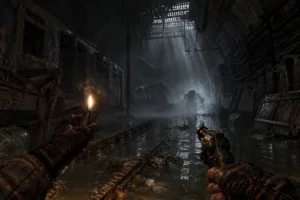
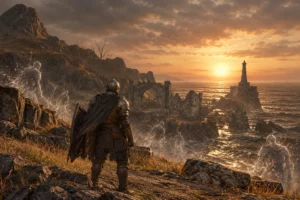
Talebound is a PvE action RPG with roguelite mechanics, designed for solo adventurers or groups of friends. Instead of relying on familiar Warcraft classes and conventional quest progression, it introduces separate characters, new combat abilities and self-contained stories.
A mysterious Storyteller drives the experience, drawing players into disturbing tales where imagined horrors become real. Each adventure combines combat, bosses, puzzles, treasure and relics. Meanwhile, a failed attempt does not mean abandoning the mode: players can immediately begin another run, losing only their temporary boons.
This distinction could make Talebound particularly interesting for people who enjoy Warcraft’s setting but prefer shorter, repeatable challenges. It also represents another direction for Blizzard’s expanding vision of Azeroth. At BlizzCon 2026, the company revealed World of Warcraft Forever and its alternative approach to Classic and Retail. Talebound explores a different question: how much can Warcraft change its gameplay while keeping its fantasy identity?
Three exclusive classes put movement ahead of familiar rotations
Perhaps the clearest departure from traditional WoW is the combat system. All three Talebound classes can double jump, dodge and guard, making positioning and defensive timing important parts of every encounter.
The Slayer combines a sword with a firearm, adopting the role of an aggressive monster hunter. This mixture suggests a fighting style built around managing different attack distances rather than remaining in one position.
Meanwhile, the Inquisitor uses holy magic to illuminate and burn opponents, including enemies concealed behind illusions. That gives the class a distinctive identity in a mode where supernatural threats and deception are central to the atmosphere.
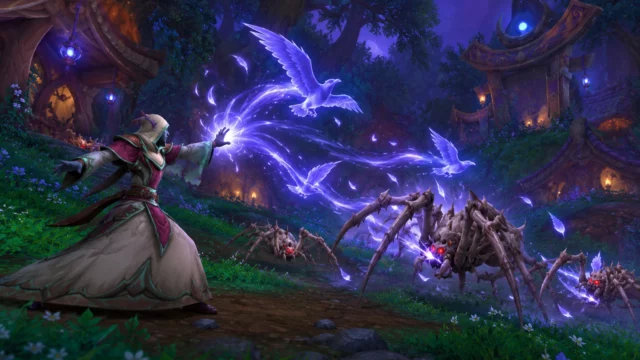
The Witch offers the most unusual collection of abilities. Lightning, poison, spiders, moonlight, thorns and ravens all feature in her magical arsenal. She can even transform into a cat. However, players should remember that several talents remain unfinished on the PTR, so these early combat options may change.
Choosing a class will therefore involve more than deciding which fantasy looks appealing. Movement, survival and the ability to react to unpredictable encounters could be just as important as raw damage.
Four locations reveal how much variety the first test offers
The introductory adventure takes place in Red Hollow, before players gain access to three separate tales. Between runs, the village of Quillgrave serves as a central hub, providing a consistent location outside the Storyteller’s dangerous adventures.
Darkhaven introduces an isolated enclave that managed to survive a devastating plague. Its premise creates a particularly unsettling backdrop for a mode built around macabre storytelling.
In Greenthistle Wood, two villages face threats from two witches, a giant and other monsters. By contrast, Greywake’s Expedition takes players to an island overwhelmed by the hadal tyrant Zzyg’th and the herald Chathoa.
Each tale supports three difficulty settings: Normal, Veteran and Heroic. As a result, players can approach the demo as an introduction to Talebound’s systems or attempt more demanding challenges once they understand their chosen class.
There is another important rule: defeating the final boss or dying ends the current run. Temporary boons disappear, but another adventure can begin immediately. Consequently, experimentation becomes part of the appeal rather than something players should necessarily avoid.
How to play Talebound without a WoW subscription
Blizzard has made access relatively straightforward. Players need a Battle.net account and the World of Warcraft Public Test Realm client, which can be installed through the Battle.net desktop application.
After installing the PTR client, players can enter the patch 12.1.7 test environment and try Talebound during the October 30–November 1 window. There is no requirement to purchase a subscription specifically for this demo.
For anyone curious about Blizzard’s action RPG design, the timing is particularly interesting. The studio is also running Diablo 4’s Halloween Shrine surprises event, where unpredictable encounters add another layer of risk to dungeon exploration. Although Talebound is a separate experience, both activities show how uncertainty can make repeated combat encounters more engaging.
Players should nevertheless treat this weekend as an early test, not a finished release. Blizzard has confirmed that PTR content can change, and some talents are still being developed. Full instructions and current details are available in the official Talebound demo announcement.
What Talebound could bring to World of Warcraft next
The complete mode is scheduled to arrive with Midnight’s patch 12.1.7, Echoes of the Worldcore. Blizzard has not announced an exact release date, although the finished update is expected to introduce a fourth tale and cosmetic rewards for players’ accounts.
Those account rewards provide an additional incentive to explore a mode that otherwise separates itself from familiar MMORPG progression. Rather than chasing another conventional equipment upgrade, players will have a reason to master encounters, experiment with classes and revisit stories.
The bigger opportunity lies in Talebound’s accessibility. A self-contained roguelite could attract Warcraft veterans who want a change of pace, alongside action RPG fans who would not normally commit to a subscription-based MMO. Whether it achieves that goal will depend on combat responsiveness, class variety and how entertaining repeated runs feel.
For now, the WoW Talebound free demo offers a rare chance to evaluate that experiment before release. If Blizzard can make every story worth revisiting, Talebound might become more than a temporary diversion inside Midnight. Could this be the Warcraft experience that finally appeals to players who never enjoyed traditional MMO progression?

Creator of the website, Pokemon trainer by nature. Trying to report on everything related to the world of video games, series and movies. Yu-Gi-Oh is my weakness, collecting cards since the dawn of time.