



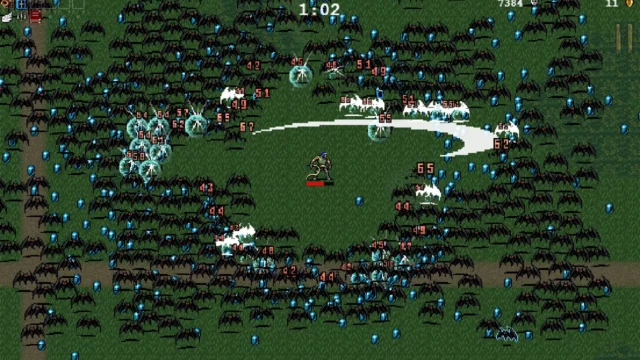
Image: poncle
Growing a successful game studio usually means changing how people work. However, the Vampire Survivors studio has chosen a different approach. Poncle now employs around 40 people, yet its projects still operate through small development teams.
At CiGADC in Shanghai on November 20, 2026, two poncle executives explained that philosophy. Jacopo Musso is chief production officer, while Matteo Sapio is chief strategy officer. Their discussion revealed how community feedback, technical decisions and creative freedom helped shape the independent company.
The Vampire Survivors studio keeps its projects small as the company grows
Poncle does not believe every employee should work on its biggest success. Instead, individual projects have dedicated small teams, while developers share technology and experience across the company.
Poncle wants to retain the flexibility associated with independent development, even as its responsibilities increase.
As detailed in 4Gamer’s report on the Shanghai conference, the company also considers community relationships essential. The new Japanese base of the Vampire Survivors studio reflects that priority.
Working with local people helps poncle introduce its games to different audiences. Similar partnerships in other countries have already helped expand its reach.
A free game made after work became a worldwide success
Before creating Vampire Survivors, founder Luca Galante moved from Italy to London and initially worked at McDonald’s. He later found employment as a programmer.
During his evenings, Galante began developing a small game almost for fun. His original goal was simply to create something enjoyable for himself and his friends.
That first version contained only one stage and was available online for free. Eventually, Galante began charging $3 for the game.
Its popularity grew through streaming rather than a conventional promotional campaign. A Korean streamer introduced the game to viewers, and other creators subsequently followed.
Today, more than 27 million people have played Vampire Survivors.
However, attracting such an audience created a new problem. Adding content became increasingly difficult without affecting features that already worked.
Galante therefore rebuilt the underlying structure to support ongoing development. Programming, artwork and quality assurance also became separate responsibilities.
Those practical changes gradually transformed a personal project into a functioning studio.
The Vampire Survivors studio applies its experience to other games
Rather than concentrating exclusively on one title, poncle now contributes to several different projects. Each follows a particular creative approach, with responsibilities distributed according to the team’s expertise.
The projects and collaborations discussed at CiGADC included:
- Vampire Survivors: The original game continues receiving content because players keep requesting more. Its current form differs considerably from Galante’s earliest version.
- Warhammer Survivors: Poncle shares technical experience with Auroch Digital, particularly around large enemy crowds and numerous characters. Its partner handles game design and balance.
- Jujutsu Kaisen game: This Shueisha Games collaboration is planned for 2027. It represents poncle’s first online versus game and involves developers familiar with the original series.
- Vampire Crawlers: The Turbo Wildcard from Vampire Survivors: A card game originating from Galante’s prototypes. It brings familiar characters and settings into a different genre.
Auroch Digital also has free content updates planned for Warhammer Survivors.
The Jujutsu Kaisen collaboration follows another approach. Fans of the series within poncle quickly assembled a development team.
Nevertheless, building an online competitive game introduced unfamiliar challenges. Development also runs alongside Vampire Survivors content production, with elements requiring supervision related to the original series.
For both collaborations, poncle values developers who understand the source material. Their familiarity helps inspire mechanics that belong naturally within each fictional universe.
Vampire Crawlers shows why poncle sometimes chooses to delay a game
Vampire Crawlers began with prototypes created by Galante. However, its design reflects a different ambition from the action-focused experience that established poncle.
The developers enjoy Slay the Spire, although they admit they are not particularly skilled at it. Consequently, they wanted something more relaxing to play after a long day.
During development, the team felt that an important element was missing. Rather than release the game as planned, poncle accepted the financial cost of delaying it.
The reworked version allows players to attach gems to cards and introduce additional effects. This mechanic became part of the experience the team wanted to create.
Accepting mistakes remains part of poncle’s independent philosophy
Mistakes are still part of life at the Vampire Survivors studio. Musso and Sapio openly acknowledged that failure remains a continuing part of their work.
One example involved publishing games developed by other studios. Poncle initially wanted to support creators, reflecting the assistance Vampire Survivors received from content creators.
However, publishing required more support than the company could adequately provide. As a result, poncle decided to reconsider that activity for the time being.
The executives encouraged other developers to plan ahead and recognize when abandoning a project makes sense. Above all, they emphasized enjoying the process of creating games.
For the Vampire Survivors studio, remaining independent is about how decisions are made, not simply how many employees work there. Small teams, shared expertise and player feedback continue to guide that approach.

A Fortnite player since the very first storm: I jump off the Battle Bus with a plan (that rarely survives the landing), build faster than I think and never miss a live event on the island. Here I bring you every new season, collab and secret before the storm closes in.


