



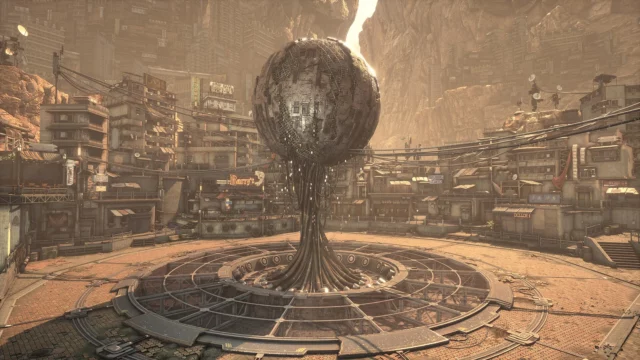
Image: SHIFT UP
Making games faster does not automatically make them better. That idea shaped how Mikami and Kim Hyung-tae discussed AI at G-STAR 2026.
The Resident Evil creator and the Stellar Blade director described a process where human creativity stays central. AI helps with technical work along the way.
Speaking at G-CON in Busan on November 19, both executives explored how technology, combat and visual design influence modern storytelling.
Mikami and Kim Hyung-tae reveal where automation belongs
Shift Up CEO Kim Hyung-tae believes avoiding AI entirely is no longer practical. However, he draws a firm distinction between assisting developers and replacing their creative decisions.
That distinction became especially important after a Shift Up music video attracted substantial criticism. According to Kim, the backlash demonstrated how strongly audiences value recognizable human craftsmanship.
Consequently, Shift Up adopted an internal principle called “Handmade from start to finish”. Artists establish the creative foundation, technology assists during production, and people refine the finished work.
As detailed in Inven Global’s report on the G-CON discussion, Mikami and Kim Hyung-tae already experiment with AI.
Their examples reveal several specific uses rather than a general commitment to automated game creation.
- Programming: Shift Up uses AI to assist coding workflows and improve code accuracy.
- Quality assurance: Automated assistance supports testing and identifying potential problems.
- Code review and debugging: AI helps developers examine code and resolve errors.
- Lighting variations: Artists can explore alternative lighting conditions during intermediate production stages.
- Texture weathering: AI assists with surface treatments that suggest age and environmental wear.
- Retopology: Automated polygon reduction helps prepare detailed models for practical game use.
- Monster concept previews: Shift Up transforms initial sketches into realistic images before committing to full modeling.
- Early 3D visualization: Mikami tests how his original 2D designs might appear inside a game environment.
Mikami and Kim Hyung-tae still put artists first
For Kim, efficiency alone offers little reason for players to appreciate a game. He warned that products built primarily around mass production could eventually lose their place in the market.
He also believes AI can make different projects look increasingly similar. Therefore, Shift Up keeps storytelling, level design and core creative decisions in human hands.
AI-generated story writing is particularly unacceptable to Kim. He considers its recognizable writing patterns incompatible with the studio’s creative ambitions.
Instead, he compares artificial intelligence to a much more advanced version of Photoshop. Its purpose is to support artists, not become the author.
Mikami expressed an even more conflicted attitude. He admitted sometimes wishing AI would disappear from the world entirely.
Nevertheless, he recognizes its ability to improve production quality without increasing budgets. His own experiments demonstrate why that advantage matters.
Previously, developers might spend almost a month modeling a design before discovering it failed inside the game. Now, Mikami can review an AI-assisted 3D preview in approximately 20 minutes.
The original drawing still comes from him. Likewise, professional modelers remain responsible for creating the final asset.
Despite that approach, Mikami acknowledged a difficult possibility. Some development jobs could disappear to AI within five or ten years.
Resident Evil and Stellar Blade show why gameplay shapes stories
The discussion also explored a problem artificial intelligence cannot solve through production speed alone. How can developers make gameplay and narrative feel inseparable?
Kim identified this as his biggest challenge while developing Stellar Blade. Story sequences repeatedly needed to lead into combat, creating difficulties with narrative pacing.
His solution combined several techniques. Adam’s accompanying drone provided explanations, while bosses contributed additional lore before their defeats.
Elsewhere, visual presentation carried much of the storytelling. Expressions, music and environmental atmosphere communicated information without requiring lengthy conversations.
Mikami described a different approach rooted in the original Resident Evil. He wanted players to experience fear directly rather than simply watch frightening events.
For example, he carefully positioned cutscenes before encounters or during important moments in boss fights. These sequences could appear when an enemy reached half or one-fifth health.
Such interruptions worked as rewards for surviving difficult situations.
Ammunition placement followed equally deliberate calculations. Mikami estimated the bullets required to eliminate every enemy, then provided approximately 1.5 to twice that quantity.
Even so, careless resource management could leave players unable to progress. He accepted that possibility because scarcity strengthened tension and meaningful player freedom.
Visual concepts can change an entire game’s direction
Another similarity emerged when Mikami and Kim Hyung-tae discussed their creative processes. Neither treats an established script as something visual artists must follow unquestioningly.
Mikami sometimes rewrites character backgrounds after seeing particularly compelling concept artwork. In those cases, visual inspiration reshapes the original narrative.
Kim recognized the approach immediately. Shift Up frequently begins with illustrations before deciding how the resulting ideas should function during gameplay.
That philosophy also informs Kim’s interest in crowded urban environments. He wants to explore combat within a densely populated, cyberpunk-style metropolis.
Unlike isolated battlefields, busy streets require convincing background activity. Making non-player characters behave like a believable crowd presents a substantial technical and artistic challenge.
Kim joked that his ambitious ideas regularly create headaches for his team. Developers sometimes scold him over the difficulties involved.
Meanwhile, Mikami favors leaving visual space for players’ imaginations. He cited Ico, Shadow of the Colossus, Journey and Inside as examples. Kim prefers greater density, allowing environments to communicate more information directly.
Unbound’s projects reflect the value of creative independence
The G-CON conversation also brought together two executives with an established professional connection. Kim has admired Mikami’s games for years, while Shift Up supports Unbound’s projects.
Mikami’s commitment to original ideas helps explain his current direction.
Interest in the studio has also grown around reports concerning Mikami’s next game and a possible 2027 release.
At G-CON, the developers instead emphasized how games should be created. Their discussion connected artistic identity with practical production decisions.
For Mikami and Kim Hyung-tae, the central distinction in AI use concerns responsibility. Technology can help developers evaluate ideas, but human creators decide which ideas deserve to survive.
That philosophy connects their approaches to horror, action and visual storytelling. Whether managing scarce ammunition or designing a crowded city, meaningful choices remain central to development.

A Fortnite player since the very first storm: I jump off the Battle Bus with a plan (that rarely survives the landing), build faster than I think and never miss a live event on the island. Here I bring you every new season, collab and secret before the storm closes in.

