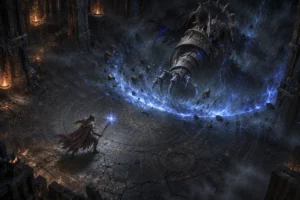
Classic stealth is finding its way back into the spotlight, and The Citadel Project might be one of its most interesting small-scale experiments. Instead of offering another action RPG where sneaking is optional, this dark fantasy adventure makes avoiding a fair fight the sensible choice. Its free PC demo is already available, while Steam Early Access begins on November 11, 2026. However, there is an important distinction between what players can experience now and what its lone developer hopes to build over the coming years.
Why The Citadel Project arrives at the right moment for stealth fans
For years, players drawn to old-school stealth have had relatively few new games built entirely around observation, darkness and improvisation. Now, several projects are revisiting those ideas from different directions. Nightdive’s Thief Remastered revival, scheduled for December 3, offers a return to an established classic. Meanwhile, Dark Messiah of Might and Magic is receiving a new edition with cooperative play.
Against that backdrop, Reliquary Software is attempting something different. Developed by a single creator, this first-person game borrows inspiration from Thief and Dark Messiah without simply recreating either. Its emphasis on environmental problem-solving, vulnerable combat and a hostile fantasy setting gives it a recognizable identity, even if those influences are easy to spot.
There is also an interesting industry contrast. Arkane Lyon, whose history includes Dark Messiah, has recently attracted attention because of reports concerning its possible sale. While the future of established studios generates uncertainty, independent creators are exploring some of the design ideas that helped make their earlier games memorable.
The Citadel Project makes darkness more valuable than weapons
The game’s strongest idea is straightforward: being difficult to see matters more than being powerful. A dynamic lighting system evaluates how exposed your character is to surrounding light sources. Consequently, shadows become useful cover, and extinguishing a torch can change the safest route through an area.
Your crossbow supports this approach with specialized ammunition. Certain bolts extinguish flames, rope bolts create opportunities to reach higher positions, and fire bolts provide another tactical option. However, ammunition is not the only reason to explore. Hidden passages can lead to additional supplies, relics, artifacts and notes that reveal more about the Citadel’s history.
Enemies also require a different mindset. Infected guards and civilians cannot be dispatched through ordinary killing methods. Instead, slipping behind them allows you to remove the diseased growths on their backs. Alternatively, you can exploit the environment by pushing enemies over ledges, knocking them into thorn-covered obstacles or attacking from above. Careless players face another problem: leaving bodies visible can alert an entire area.
A prison escape that rewards curiosity over brute force
The setting gives these mechanics a compelling reason to exist. The Citadel was constructed by the Ancient Kings as humanity’s final defense against the Great Storm. Yet the enormous structure is being consumed by a malignant presence from within. Players begin as an insignificant prisoner escaping a cell buried deep inside its interconnected corridors.
Rather than presenting a conventional power fantasy, the adventure emphasizes vulnerability. There are no magic spells to rescue you from every dangerous encounter, and direct fighting puts you at a disadvantage. Combat and a parry system are present, but they complement stealth rather than replace it.
According to PC Gamer’s November 8 demo hands-on, the game also incorporates Dark Souls-style bonfire checkpoints for character upgrades. Meanwhile, environmental details, item descriptions and scattered notes help communicate its story. That comparison should not be mistaken for a promise of FromSoftware-level difficulty. The emphasis remains on finding a clever way forward, not mastering punishing boss encounters.
The Citadel Project Early Access: what are you actually buying?
This is where expectations become especially important. According to the developer’s official Steam listing for The Citadel Project, the initial Early Access release includes the entire base game and two playable areas. The estimated duration is three to four hours, although thorough exploration can extend that figure.
The longer-term plan is substantially larger. Reliquary Software expects Early Access to continue for approximately one to two years. During that period, six additional areas are planned, alongside more enemy types, items and improvements to character progression, RPG mechanics and enemy artificial intelligence. These are development goals rather than features guaranteed to be available on November 11.
Pricing is another detail to consider. No exact launch price has been announced, although the developer intends to begin at a relatively low price and increase it slightly after major updates. The project is using Early Access instead of a Kickstarter campaign, with community feedback primarily gathered through Discord and X.
Fortunately, interested players do not need to commit immediately. A free Steam demo provides an opportunity to assess the lighting, movement and stealth systems before purchasing. The PC release supports English voice acting and text, alongside German, Polish, Russian and Simplified Chinese text.
The Citadel Project is arriving at a promising time for anyone who misses stealth games where planning matters more than reflexes. Still, its immediate appeal depends on whether a compact opening experience feels worthwhile on its own. For players willing to follow a solo developer’s long-term vision, the demo is the most sensible place to start. The bigger question is whether this ambitious Citadel can grow without losing the focused design that makes it interesting.

A Fortnite player since the very first storm: I jump off the Battle Bus with a plan (that rarely survives the landing), build faster than I think and never miss a live event on the island. Here I bring you every new season, collab and secret before the storm closes in.