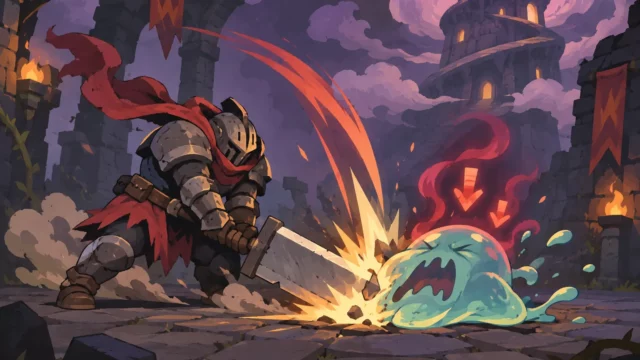
Some cards win battles with spectacular damage. Others become essential because they force players to think before spending their energy. Slay the Spire 2 Bash belongs firmly in the second category, and Mega Crit has offered a surprisingly confident endorsement of its design.
While the studio continues refining its roguelike sequel during Early Access, one familiar Ironclad attack apparently needs no reinvention. That raises an interesting question: what makes a card perfect when players can easily find stronger alternatives?
Slay the Spire 2 Bash reveals Mega Crit’s idea of balance
During the Q&A section of Mega Crit’s October 2026 Neowsletter, a player named Jeremy asked whether anything in development had been nailed on the first attempt. Considering how frequently Early Access games receive adjustments, it was a particularly interesting question.
Casey from Mega Crit responded with just five words: “Bash is the perfect card.” The exchange appears in the studio’s official October 2026 Neowsletter on Steam, alongside information about upcoming updates and community events.
At first glance, Bash hardly seems like an obvious candidate. It is one of Ironclad’s starting cards, costs two energy and deals eight damage while applying two Vulnerable. Upgrading it increases those values to ten damage and three Vulnerable.
However, its usefulness extends beyond the initial hit. Vulnerable makes enemies take 50% more damage from attacks, creating opportunities to punish dangerous opponents over subsequent turns. Consequently, a relatively modest card can influence an entire combat sequence.
Its greatest strength may be that it never makes the player’s decision automatic. Bash offers a valuable effect, but spending two energy on it carries a genuine opportunity cost.
Why Slay the Spire 2 Bash teaches more than a huge attack
Consider a basic Ironclad turn with three energy. Playing Bash followed by a standard Strike deals 17 damage against an enemy without additional modifiers. By comparison, playing three ordinary Strikes deals 18 damage.
That difference is revealing. Bash does not necessarily deliver the strongest immediate result, even when combined with another attack. Instead, its value depends on whether players can exploit Vulnerable before the effect expires.
For example, imagine facing an enemy preparing a powerful attack. Spending two energy on Bash might leave insufficient resources for defense. Alternatively, using defensive cards could preserve enough health to survive another turn, even if that means delaying offensive pressure.
Neither decision is universally correct. Enemy intentions, remaining health, available energy and the cards likely to appear next all influence the outcome. Bash rewards understanding the situation rather than following a fixed combination.
This is where its design becomes particularly interesting. New players learn that damage numbers alone do not determine a card’s usefulness. Meanwhile, experienced players can evaluate whether applying Vulnerable now will create enough future damage to justify the investment.
Upgrading Bash also presents a meaningful choice. Three Vulnerable provides a longer opportunity to capitalize on increased attack damage, but spending an upgrade on a starter card means postponing improvements elsewhere in the deck.
A starter card that quietly teaches deckbuilding strategy
The most useful way to approach Bash is not to treat it as a permanent centerpiece of every Ironclad build. Instead, players can use it to understand how individual cards become stronger through the surrounding deck.
Cheap attacks, zero-cost offensive options and energy-generating cards can make its Vulnerable effect easier to exploit. Conversely, a deck with expensive attacks and limited energy may struggle to convert that status effect into meaningful damage.
Timing matters as well. Applying Vulnerable immediately before a strong offensive turn can be more productive than playing Bash simply because it appears in your hand. Sometimes, declining to use a card is the smartest decision available.
That relationship between resources and timing helps explain why deckbuilding roguelikes remain so compelling. Different developers explore the same fundamental tension through very different mechanics. For example, HARMA’s cooperative roguelike deckbuilding revolves around managing Focus to influence unpredictable artifact effects.
Another interesting contrast appears in My Ransomware Can’t Be This Cute?! and its unusual card-based risks, where deduction and the temptation to gamble shape decisions.
Slay the Spire 2 approaches this problem through combat efficiency. Bash asks a deceptively simple question: is the energy spent now worth the advantage it might create later?
For newcomers, learning to answer that question is arguably more important than memorizing a list of powerful cards. It is also a useful reminder that good deckbuilding involves removing weaknesses, improving consistency and recognizing when an apparently ordinary card still deserves a place.
November’s beta patch puts that philosophy in perspective
Casey’s comment arrives while Mega Crit continues developing Slay the Spire 2 in Early Access on PC through Steam. The sequel began its Early Access journey on March 6, 2026, building on the original game’s influential combination of tactical combat and evolving card decks.
According to the October Neowsletter, the next major beta patch is planned for November 12, 2026. New content will initially remain exclusive to the beta branch. Meanwhile, the default branch is being brought up to date with the current beta version, v0.111.0.
That distinction matters for players who prefer the regular release branch. They should not assume every new beta feature will become available to everyone immediately. Likewise, the announced patch date is a development target rather than a guarantee that every planned change will arrive unchanged.
The studio also confirmed that part of its team will attend WePlay 2026 in Shanghai on November 21 and 22. Visitors can expect a Slay the Spire 2 booth, playable demos and a Q&A and signing session with Casey.
These activities provide two different opportunities for feedback. Beta players can examine upcoming changes directly, while event attendees will have a chance to interact with the developers in person.
Interestingly, the praise for Bash highlights an important distinction within that ongoing development process. Constant balancing does not mean every established mechanic needs to change. Some designs may already create exactly the kind of decisions a studio wants players to experience.
Ultimately, Slay the Spire 2 Bash demonstrates why a card does not need overwhelming damage to deserve a place in a carefully designed roguelike. Its limitations are part of what makes it interesting. As Mega Crit prepares its November beta update, will future cards preserve that same delicate balance between immediate power and long-term strategy?

Creator of the website, Pokemon trainer by nature. Trying to report on everything related to the world of video games, series and movies. Yu-Gi-Oh is my weakness, collecting cards since the dawn of time.