Victorian Psycho adapts a novel by Spanish author Virginia Feito, but its ending differs from the book. Feito, who wrote the screenplay herself, has explained why she wanted the two versions to remain distinct. Directed by Zachary Wigon, the Maika Monroe film opened in US and Spanish theaters on November 13, 2026. Its journey to cinemas began unusually early, before the original novel had even been published.
Why Victorian Psycho has a different ending from the novel
Feito approached the screenplay as an opportunity to reshape her story rather than reproduce every detail. In TheWrap’s November 17 interview, she discussed adapting the novel alongside director Zachary Wigon. She compared the process with translation, where certain elements disappear while unexpected possibilities emerge. That approach ultimately influenced the film’s most significant departure from the book.
The ending underwent a substantial change, although Feito did not reveal what happens in it. Feito explained that the revised conclusion better matches the film’s more restrained visual style. She also wanted the novel and adaptation to function as separate creative works. Readers of the novel should therefore expect a different conclusion on screen.
Victorian Psycho began as a film before the book arrived
Unlike many literary adaptations, this project started moving toward cinema before its source novel reached publication. Wigon encountered an early manuscript and recognized its potential as a film. Feito subsequently worked closely with him while developing the screenplay. She also serves as an executive producer, maintaining a creative role beyond writing the script. Translating the book’s graphic violence presented another challenge during development. The original story contains particularly gory scenes, which required decisions about their cinematic presentation. Feito’s comments establish that adaptation involved more than transferring dialogue and events between formats.
A governess arrives at a sinister Victorian manor
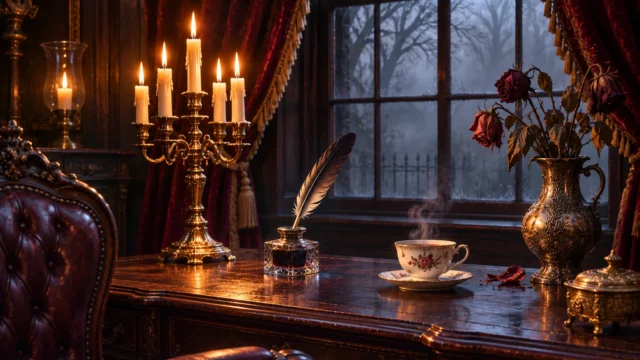
Set in 1858, the story follows Winifred Notty, an eccentric young governess played by Maika Monroe. She arrives at Ensor House, a remote gothic manor, to work for a wealthy family. Soon, members of the household staff begin disappearing under troubling circumstances. Suspicion gradually falls on the newcomer, who may be concealing something sinister.
The premise combines period drama surroundings with dark comedy and horror. However, Feito’s adaptation also changes how its central character comes across on screen. She found Monroe’s interpretation unexpectedly tender, giving Winifred an almost sweet quality. According to Feito, that softer impression makes the character’s anger feel more unsettling when it emerges.
Cast, director and release details
The production brings together several established performers alongside its writer and director. Monroe leads the cast, with Thomasin McKenzie, Ruth Wilson and Jason Isaacs also appearing. Feito wrote the screenplay and serves as executive producer, while Wigon directs. The film’s US theatrical release followed its earlier festival presentation in France.
- Director: Zachary Wigon.
- Screenwriter: Virginia Feito, adapting her own novel.
- Executive producer: Virginia Feito.
- Cast: Maika Monroe, Thomasin McKenzie, Ruth Wilson and Jason Isaacs.
- Setting: 1858, primarily around the fictional Ensor House.
- Cannes premiere: May 2026, in the Un Certain Regard section.
- Theatrical release: November 13, 2026, in the US and Spain.
- Spanish distributor: Diamond Films.
Cannes reception and the film’s theatrical opening
Before reaching American theaters, the film premiered at Cannes in May 2026. It screened within Un Certain Regard and received a five-minute standing ovation. Following its US opening, it also earned Rotten Tomatoes’ Certified Fresh designation for positive critical reviews.
The adaptation also joins a wider group of screen projects drawing on literary and historical settings. Another example is Netflix’s Pride and Prejudice adaptation, which approaches period storytelling through a different genre. Meanwhile, Inferno, starring Vera Farmiga, is another horror film in development. Victorian Psycho stands apart through its combination of gothic atmosphere, dark comedy and Feito’s rewritten conclusion.
Where to watch Victorian Psycho
Victorian Psycho opened in theaters in the United States and Spain on November 13, 2026. In Spain, Diamond Films handles the release, according to SensaCine’s listing. The new ending remains a surprise, since Feito has not revealed what happens in it. Readers of the novel will have to see the film to discover how it differs.
For now, the central development is Feito’s explanation of her creative decisions. Her involvement allowed the Spanish novelist to reshape her own material for a different medium. The result retains the story’s Victorian setting and unsettling governess while taking a separate narrative direction. Victorian Psycho is now playing in theaters in the US and Spain.

Creator of the website, Pokemon trainer by nature. Trying to report on everything related to the world of video games, series and movies. Yu-Gi-Oh is my weakness, collecting cards since the dawn of time.