



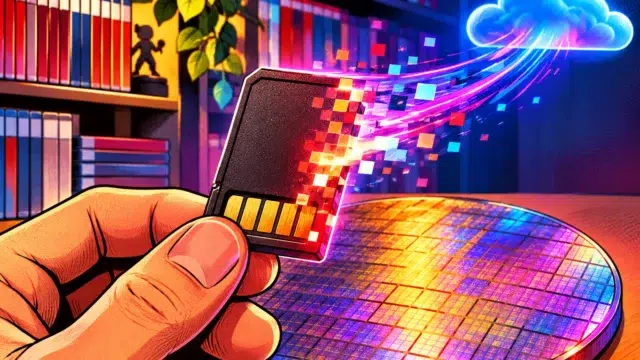
Switch 2 physical games are not disappearing, but their future may depend on more than Nintendo’s willingness to keep selling cartridges. A major memory supplier is stepping away from the technology used to store games on physical cards. For collectors, that raises a more important question: will future boxed releases still contain playable software?
The distinction already matters on Nintendo Switch 2, where traditional cartridges coexist with Game-Key Cards. Now, a decision made far outside Nintendo could make that difference even more significant.
Why Switch 2 physical games face a supply chain problem
Taiwanese semiconductor manufacturer Macronix is gradually withdrawing from the ROM business. The company has supplied memory chips used in Nintendo Switch and Switch 2 game cards, making its change of direction relevant to both generations of hardware.
According to details from Macronix’s third-quarter 2026 financial results, shared by analyst David Gibson on November 4, the manufacturer will no longer introduce new ROM products. Furthermore, Q3 2026 will be the final quarter in which ROM revenue is reported separately.
The figures explain why this business is losing priority. ROM accounted for approximately 5% of Macronix’s quarterly revenue, while segment sales declined 39% compared with a year earlier. Instead, the company is concentrating on NOR flash and eMMC memory.
However, this is not an announcement that Nintendo cartridges will stop being manufactured tomorrow. Macronix is one supplier within a broader production network, and other manufacturers can continue producing memory for physical releases.
The real risk is changing what a cartridge contains
A physical box does not always guarantee a complete game. That is already one of the defining complications of Nintendo Switch 2, which supports both conventional game cards and Game-Key Cards.
Traditional cartridges store game data directly on the card, although individual titles may still require updates or additional downloads. Game-Key Cards work differently: players insert the card, download the software and keep the card inserted to play.
Consequently, both products can occupy the same retail shelf while offering very different experiences. A Game-Key Card can still be shared or resold, but its initial installation depends on access to downloadable files.
Nintendo has already defended the continued existence of physical software. As we covered in our report on Nintendo’s commitment to Switch 2 cartridges, keeping retail releases available does not automatically settle questions about what those releases contain.
Macronix’s withdrawal adds another consideration. If producing conventional game cards becomes more difficult or less attractive, publishers may have additional reasons to consider download-dependent alternatives. That remains a possible consequence, however, rather than a confirmed Nintendo policy change.
Why complete cartridges could become more valuable
For players who primarily purchase games digitally, a supplier changing its product strategy may have little immediate impact. The situation looks different for anyone building a physical collection.
A complete cartridge offers practical benefits beyond its packaging. It can reduce the need for an initial download, preserve a playable version of a game and make sharing software between compatible consoles more convenient.
Meanwhile, a download-dependent physical release introduces another consideration: long-term access to its installation files. Even if the card remains in perfect condition, installing the game again may depend on the continued availability of online services.
This difference is particularly relevant when comparing individual releases. For example, Stellar Blade’s Switch 2 physical edition illustrates the appeal of putting the complete game on a cartridge rather than requiring a separate download.
Nevertheless, a supplier leaving one memory segment does not establish that complete cartridges will become more expensive or disappear. Those outcomes would depend on Nintendo’s alternative suppliers, manufacturing arrangements and decisions made by individual publishers.
For now, buyers have a simpler way to protect their preferences: check whether a physical edition contains the full playable game before purchasing it. The distinction matters more than the presence of a plastic box.
Nintendo’s digital growth makes the timing important
The wider market is already moving toward downloadable software. Digital purchases accounted for more than 60% of Nintendo’s software sales in a recent fiscal quarter, although that percentage can change considerably when major physical releases arrive.
This does not mean every player has abandoned cartridges. Nor does a digital sales share above 60% prove that traditional physical games are commercially irrelevant. Nintendo continues serving customers with different purchasing habits.
However, Macronix’s decision shows how changes in the semiconductor industry can influence the options available to game publishers. Manufacturing priorities are shaped by demand, production capacity and profitability, not just by what console owners prefer.
The company’s decision to prioritize NOR flash and eMMC reflects its own business considerations. Whether Nintendo responds by adjusting suppliers, maintaining its existing physical strategy or expanding its use of Game-Key Cards remains unknown.
More information could emerge on November 5, 2026, when Nintendo is scheduled to publish its latest financial results. Investors may ask about physical software, manufacturing costs or the growing digital business, although no such discussion has been confirmed.
As of November 4, Nintendo has not publicly commented on Macronix’s ROM withdrawal. Analyst David Gibson’s account of the company’s results was also covered in reporting on Macronix’s memory business changes.
Ultimately, the future of Switch 2 physical games may be decided less by whether cartridges remain on store shelves and more by how much software those cartridges actually preserve. For collectors, that is the distinction worth watching. Will complete game cards remain the standard for major releases, or gradually become a selling point of their own?

Creator of the website, Pokemon trainer by nature. Trying to report on everything related to the world of video games, series and movies. Yu-Gi-Oh is my weakness, collecting cards since the dawn of time.


