



Image: Mega Crit
Slay the Spire 2 co-op represents more than a multiplayer addition for Mega Crit. It reflects Casey Yano’s ambition to rebuild a successful game without carrying over its biggest limitations.
During a November 20 fireside chat in Shanghai, Yano explained why the sequel needed a fresh approach. His ultimate ambition is personal: making Slay the Spire 2 his finest work.
Slay the Spire 2 co-op makes learning part of the adventure
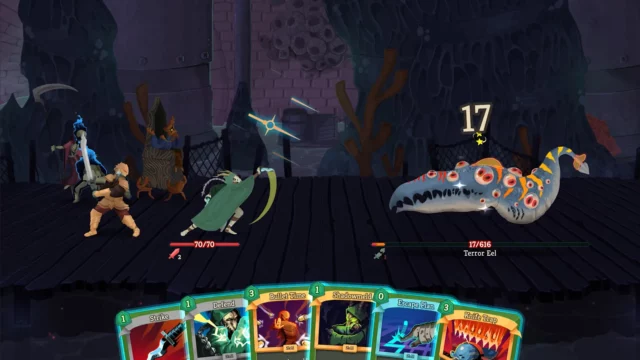
Slay the Spire combines roguelike progression with deckbuilding. Players climb a tower, collect cards and adapt their strategies to changing encounters. However, mastering its decisions takes experience.
For Yano, playing alongside someone experienced offers a natural way to learn. Imagine a newcomer watching a veteran reject every card reward after combat. That shows the newcomer that skipping a card is a valid option.
Beginners can then ask their companions why on the spot. For Yano, that matters in a game with so much to learn.
With Slay the Spire 2 co-op, Yano wanted something resembling friends gathering around a board game. That ambition also explains why multiplayer required substantial development work. The original game supported one player, meaning its networking foundations needed to be created from scratch.
The sequel rebuilds technology that limited the original game
Despite the first Slay the Spire’s success, its creator identified several problems worth addressing. The original was developed in Java, which presented memory management and performance challenges. Yano also believed its visual presentation could improve.
Rather than simply expanding the existing game, Mega Crit treated the sequel as an opportunity to reconsider its technical foundations.
As 4Gamer’s report on the Shanghai developer conversation explains, these ambitions emerged during Yano’s discussion with IGN Japan’s Daniel Robson.
The fireside chat took place at CiGADC, the China Indie Game Alliance developer conference, during WePlay Expo 2026.
Early access helps Mega Crit discover what players actually enjoy
Yano also admitted that most of his ideas do not work as expected.
Some concepts initially seemed promising but became disappointing once implemented. Conversely, experiments attempted without great expectations sometimes developed into excellent features after adjustments.
This uncertainty helps explain Mega Crit’s approach to early access. Like its predecessor, Slay the Spire 2 entered players’ hands before its full release.
Rather than relying entirely on predictions, the studio can observe actual behavior. Surveying millions of people about their interest in multiplayer would be impractical. However, gameplay data can reveal how often players choose Slay the Spire 2 co-op.
Character selection provides another useful signal. By identifying popular characters, developers can better understand where players concentrate their attention.
Those observations help Mega Crit decide which features deserve additional development time before the finished release.
Meanwhile, the sequel’s sales and playtime keep growing during early access.
Slay the Spire 2 co-op reflects Yano’s development priorities
These are the main points from Yano’s talk about the sequel:
- Rebuild weak foundations: Address memory handling, performance and visual limitations inherited from the original game.
- Make multiplayer meaningful: Create a cooperative experience inspired by friends sharing a board game.
- Help newcomers learn: Let experienced players demonstrate strategies and explain difficult decisions during gameplay.
- Test ideas through play: Accept that promising concepts can fail while unexpected experiments sometimes succeed.
- Use early access deliberately: Study cooperative participation and character preferences to guide development priorities.
- Release early projects quickly: Encourage new developers to finish games, gather feedback and improve through experience.
- Focus on the current project: Treat Slay the Spire 2 as the game Yano wants to make his masterpiece.
Yano wants his current game to become his masterpiece
The conversation also explored Mega Crit’s beginnings. Yano initially hoped game development would provide enough income for a basic living.
His enthusiasm for roguelikes complemented co-founder Anthony Giovannetti’s interest in card and board games. Combining those preferences eventually produced Slay the Spire’s distinctive design.
That history shaped Yano’s advice for aspiring developers. Instead of spending two or three years perfecting a debut project, he recommends finishing one in roughly six months.
Releasing a game allows developers to discover problems that remain invisible during production. Furthermore, those lessons can improve their second and third projects.
Giovannetti’s experience illustrates that progression. Slay the Spire was already his fourth game.
Yano also acknowledged how developers often imagine their next project becoming their greatest achievement. However, when asked about Slay the Spire 3, he firmly rejected that direction.
His attention remains on the sequel currently under development. Slay the Spire 2 is the masterpiece he wants to create.

A Fortnite player since the very first storm: I jump off the Battle Bus with a plan (that rarely survives the landing), build faster than I think and never miss a live event on the island. Here I bring you every new season, collab and secret before the storm closes in.


