The Path of Exile endgame is about to become a different kind of challenge. Instead of simply adding more monsters and rewards, Grinding Gear Games is giving players greater control over how dangerous their encounters become. With customizable boss fights, overlapping Atlas mechanics and a major loot overhaul, version 3.30 could change the decisions players make before every battle.
Revealed at ExileCon 2026, Covens of Umbra arrives on Friday, November 13, 2026. The expansion brings a new challenge league to the original free-to-play ARPG, alongside changes that reach far beyond its seasonal storyline.
Path of Exile endgame changes put risk in players’ hands
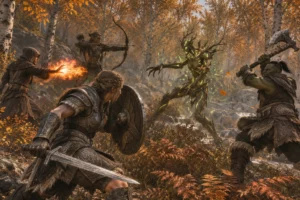
One of the most interesting changes begins before players even reach the Atlas. Throughout the campaign, followers of the Coven Queen perform rituals connected to the centuries-old Witches of Umbra. Interrupting those ceremonies allows players to select Fates that strengthen an area’s boss while improving its rewards.
As the adventure progresses, each area can offer four or five Fates. Players may combine up to three for one encounter, creating tougher battles with potentially greater returns. Certain combinations unlock additional effects when specific conditions are met. Meanwhile, stacking identical Fates dramatically increases their influence.
This creates an important distinction: difficulty is no longer determined only by the enemy waiting at the end of an area. Players also decide how much additional danger to introduce. Grinding Gear Games has rearranged campaign zones where necessary to ensure their bosses appear, while adding more than two dozen new bosses to previously empty areas. Every one of these encounters can be farmed again in the endgame.
The Wickerman makes boss rewards part of character progression
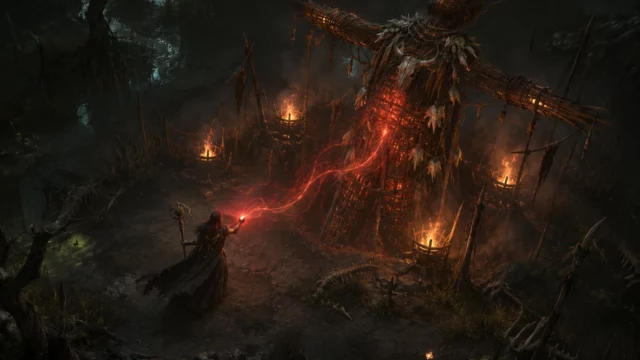
Covens of Umbra introduces another layer through the Wickerman, an unsettling figure to which players bind their souls. Enemies empowered by Fates can drop trophies representing heads, bodies, arms and legs. Attaching these remains to the Wickerman allows players to absorb some of their power.
Up to four trophies can be equipped simultaneously, with three rarity tiers available. Consequently, the system gives players another reason to pay attention to Fate-enhanced encounters beyond their immediate rewards.
More demanding challenges come through Grim Fates. These special modifiers correspond to individual pinnacle bosses and change how their attacks work. They occupy a dedicated Wickerman slot, separate from ordinary trophies. Ultimately, the league leads to a confrontation with the Coven Queen herself.
The interesting connection is between encounter difficulty and progression. Fates influence the battles players choose, while trophies allow part of that encounter power to become a continuing element of their character setup.
Path of Exile endgame maps become a system of overlapping mechanics
The Atlas receives one of the expansion’s largest transformations. Its new colored regions determine which league mechanics appear, and combining activities increases both danger and potential rewards. Rather than treating each mechanic as an isolated event, players will need to consider how several systems interact within a single map.
Those interactions can produce unusual situations. A Tormented Spirit near an Expedition encounter may become buried beneath a haunted gravestone. Strongboxes can become infected by Blight, while Mercenaries close to an Abyss pit might appear alongside the Chaplain of the Well.
Individual activities are changing too. Blight receives new modifiers, while Ritual can involve the Bodach’s gaze or a minion of the King in the Mists. Ultimatum introduces a double-down gamble, and Expedition gains obelisks capable of reviving magic and rare monsters.
Other adjustments broaden the overhaul. Mirage, originally introduced in version 3.28, becomes a permanent core mechanic and now affects an entire map. Beyond gains portals that keep spawning plus a stronger boss encounter. Harvest replaces the Grove with a Sacred Roots encounter, while Settlers receives experience and gold improvements.
Additionally, Delve, Heist and Sanctum resources become visible on the Atlas. Bestiary also drops its requirement to capture yellow beasts. Taken together, these changes suggest that choosing where and how to run maps will matter as much as choosing which mechanic to pursue.
Threads of Creation replace Scarabs and reshape map preparation
Perhaps the most fundamental structural change is the removal of Scarabs in favor of Threads of Creation. These items drop as loot associated with ten core mechanics: Abyss, Blight, Legion, Breach, Incursion, Betrayal, Bestiary, Expedition, Ultimatum and Ritual.
Players can insert up to eight Threads into the map device. Later progression allows three mechanics to be enhanced simultaneously. Furthermore, the Atlas remembers the previous configuration, reducing the need to rebuild the same setup repeatedly.
Not everything previously handled by Scarabs disappears. Some of those functions move into the redesigned Atlas passive tree. This divides map customization between the items players acquire and the choices they make through Atlas progression.
The practical difference is significant. A player interested in combining mechanics now has a system specifically built around that approach. However, stacking more activities also increases danger, so stronger rewards come with a more complicated battlefield.
Less loot clutter could make the November update matter even more
Beyond its combat systems, version 3.30 changes how equipment appears on the ground. Grinding Gear Games wants fewer unnecessary drops and more reasons to inspect the items that remain. Tier-five magic items can drop as fractured bases, while the most valuable currency is intended to come from bosses and unique monsters.
This direction complements the broader expansion. More than two dozen additional campaign bosses, repeatable endgame encounters and customizable Fate battles all give players additional opportunities to fight meaningful enemies. Meanwhile, reducing item clutter could make those encounters easier to evaluate through their rewards.
Game director Jonathan Rogers has described the update as one of the largest endgame transformations in a long time. That assessment makes sense when looking at how many connected systems are changing, rather than counting individual additions.
The timing is also notable. Grinding Gear Games plans to maintain both Path of Exile titles side by side, alternating their seasonal leagues. While the original receives Covens of Umbra in November, Path of Exile 2 is preparing its free-to-play version 1.0 launch in December.
For anyone planning to return, the original Path of Exile remains free on PC through Steam or Grinding Gear Games’ own launcher. The studio has published additional expansion details on the official Covens of Umbra page.
Ultimately, the Path of Exile endgame overhaul is about more than additional content. It changes how players assemble challenges, combine map activities and judge rewards. The real test after November 13 will be whether these interconnected systems make difficult encounters feel more worthwhile.

Creator of the website, Pokemon trainer by nature. Trying to report on everything related to the world of video games, series and movies. Yu-Gi-Oh is my weakness, collecting cards since the dawn of time.