



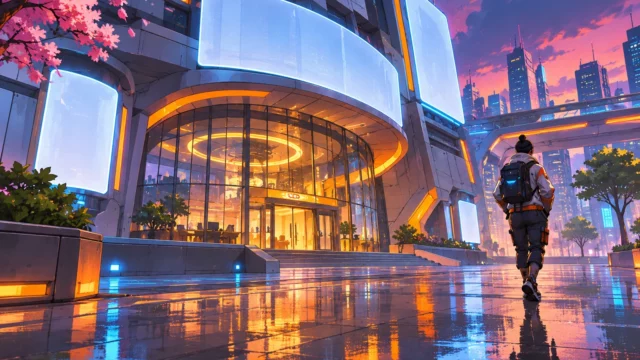
Overwatch 2 development raises an uncomfortable question about Blizzard’s biggest promises: what happens when a sequel is announced before its creators have agreed on what it should become? Former game director Jeff Kaplan has now described the internal conflict behind that decision, offering a revealing perspective on a project whose original ambitions changed considerably before and after launch.
His account also gives the troubled sequel a different context. Rather than simply looking at cancelled features, it suggests that disagreements over creative control, commercial expectations and development priorities were already affecting the project years before players experienced the finished game.
Overwatch 2 development began losing its creative direction in 2018
According to Kaplan, tensions between the development team and Blizzard’s leadership became a recurring problem in 2018. Until then, he had been accustomed to defining the direction of Overwatch as its game director. However, that responsibility gradually became harder to exercise as executives gained influence over schedules, mechanics and broader decisions.
Kaplan says he spent approximately three years trying to regain that creative authority. Eventually, he concluded that control rested with Blizzard and Activision executives rather than the people directly responsible for building the game. He left Blizzard in 2021, ending his long association with one of the company’s most recognizable franchises.
This distinction matters because creative leadership involves more than choosing characters or adjusting gameplay. It also means deciding which ideas are achievable, how much time a feature needs and whether a proposed direction fits the experience players already enjoy. When those responsibilities become fragmented, maintaining a consistent vision can become significantly more difficult.
Why the Overwatch 2 development warning matters after the PvE cancellation
BlizzCon 2019 presented Overwatch 2 as a major step forward for the franchise. Yet Kaplan now says he strongly opposed revealing the sequel during the opening ceremony. His concern was fundamental: the team had not fully established what Overwatch 2 would be or how its business model would function.
In the Jeff Kaplan Tell All Interview on Gaming World Interviews, he recalls confronting a Blizzard president and his executive producer over the announcement. He specifically clarifies that the president involved was not Mike Morhaime, for whom he expresses considerable affection.
Kaplan also questioned the decision to unveil Overwatch 2 alongside Diablo 4. According to his account, the executives wanted to demonstrate that Blizzard remained capable of delivering major games. He strongly rejected that reasoning, arguing that the announcement was premature.
With hindsight, the disagreement becomes especially significant. Overwatch 2 eventually launched in October 2022 as a free-to-play title. Meanwhile, one of its most ambitious promised features, the PvE Hero Mode with hero progression, was cancelled in 2023.
That cancellation does not prove Kaplan’s objections directly caused or predicted every subsequent problem. Nevertheless, it highlights the gap between the sequel’s original presentation and the experience Blizzard ultimately delivered. For players expecting a substantial cooperative progression system, that difference was particularly important.
Blizzard’s business priorities became part of the Overwatch 2 conflict
Kaplan’s latest comments also connect with an earlier account he shared in 2026. He previously described receiving a warning from Activision Blizzard’s financial leadership that failure to meet certain Overwatch financial targets could result in 1,000 layoffs, with responsibility attributed to him.
He characterized that experience as the worst moment of his professional career. Although the statement represents his personal account of an internal conversation, it provides additional context for the pressure he says surrounded the franchise.
There is an important difference between setting commercial targets and allowing those targets to determine creative decisions. Multiplayer games need sustainable revenue, particularly when they depend on continuous updates and long-term support. However, development teams also need enough stability to build features that cannot be completed on a short schedule.
Overwatch 2 illustrates how difficult that balance can become. Its transition to free-to-play established a different commercial foundation, while the abandonment of Hero Mode removed an important part of the original sequel proposal. The result was a game whose identity evolved substantially from its initial announcement.
What Kaplan’s revelations mean for Overwatch today
Kaplan’s interview arrives at an interesting moment for the franchise. Blizzard continues to reconsider elements of Overwatch’s competitive identity, including the relationship between five-player and six-player teams.
As Battle4Play recently covered, Overwatch is bringing back 6v6 Role Queue alongside 5v5, giving players more options rather than replacing the established competitive format. This approach shows how the current team is exploring different ways to accommodate player preferences.
However, it would be misleading to interpret these newer changes as direct consequences of Kaplan’s departure. His comments concern decisions made years earlier, while the current development team operates under different circumstances.
Kaplan himself has moved on. He now works on The Legend of California at Kintsugiyama, the independent studio he co-founded. His new position makes the interview particularly interesting because he can discuss his Blizzard experience from outside the company, although his account remains one perspective on those internal disagreements.
Ultimately, the most revealing aspect of Overwatch 2 development may not be the argument surrounding BlizzCon 2019. It is the broader question of whether a studio should publicly commit to an ambitious sequel before its creative direction, production schedule and commercial strategy are sufficiently defined. For Overwatch players, the cancelled PvE plans remain a reminder of why that distinction matters.

A Fortnite player since the very first storm: I jump off the Battle Bus with a plan (that rarely survives the landing), build faster than I think and never miss a live event on the island. Here I bring you every new season, collab and secret before the storm closes in.


