



Before cameras begin rolling in Spain, Mare Nostrum has secured an important piece of its international distribution strategy. The upcoming Antonio Banderas film, directed by Argentine filmmakers Mariano Cohn and Gastón Duprat, now has Buena Vista International attached for Latin America. Meanwhile, production is preparing to begin in Bilbao in March 2027.
The project brings Banderas back together with the directors of Official Competition. However, their latest collaboration takes a different approach. This time, a rescue operation aboard an enormous cargo ship becomes the starting point for a political confrontation involving governments, corporations and people stranded at sea.
Mare Nostrum secures Latin American distribution ahead of filming
Buena Vista International has acquired theatrical and all-media distribution rights across Latin America. The agreement establishes a distribution partner for that region before principal photography begins.
According to Variety’s November 11, 2026 exclusive, HanWay Films is handling international sales and presenting the project at the American Film Market (AFM). These are separate responsibilities. Buena Vista International has acquired rights for a specific region, while HanWay is overseeing sales to international buyers.
The confirmed commercial and production details are:
- Film: Mare Nostrum.
- Lead actor: Antonio Banderas, playing a container ship captain.
- Latin American distributor: Buena Vista International.
- Distribution rights: Theatrical and all-media rights across Latin America.
- International sales: HanWay Films.
- Sales market: American Film Market (AFM), November 2026.
- Production status: Pre-production is underway.
- Principal photography: Scheduled to begin in March 2027.
- Filming location: Bilbao, Spain.
The AFM timing also places the project alongside other films seeking international partners. Among them is the crime thriller Murdering Michael Malloy, which is also making commercial moves at this year’s market. Although the two productions have very different stories, both illustrate how sales activity can advance months before filming is completed.
Mare Nostrum turns a rescue at sea into an international crisis
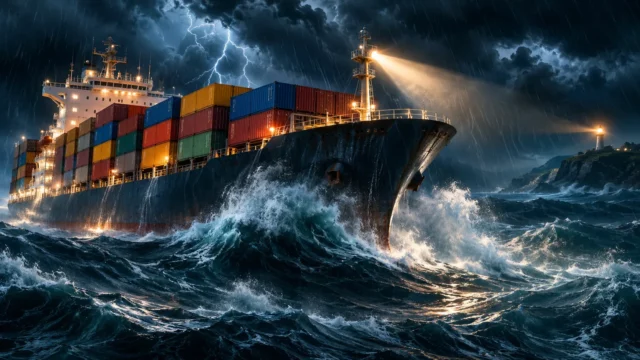
Banderas plays a character identified as the Captain, who commands a massive container ship transporting cargo worth one billion euros. His voyage begins in Istanbul and is supposed to end in Cape Town. However, a storm interrupts the journey and forces him into a decision with consequences far beyond his vessel.
After encountering refugees traveling in a small dinghy, the Captain chooses to rescue them without obtaining prior authorization. What initially appears to be a humanitarian response soon develops into a diplomatic emergency. European countries refuse to allow the ship to dock, leaving those aboard caught between maritime responsibility, political interests and international pressure.
As the situation attracts worldwide attention, the Captain becomes an increasingly visible public figure. Expressions of support arrive, yet they offer little practical help. Meanwhile, the crisis draws in an unusual collection of participants, including Spain’s prime minister, activists, coast guards, an international rock star, a determined corporate lawyer and marine insurance brokers.
At the heart of the ordeal are the refugees themselves. According to the announced premise, they are a group of African passengers spanning different ages, whose presence transforms a commercial voyage into a confrontation over borders, responsibility and the limits of public solidarity.
The most interesting dramatic tension lies in the distance between rescuing people and finding somewhere safe for them to disembark. Aboard his ship, the Captain can make the first decision, but he cannot resolve the political consequences alone. That imbalance gives the story a conflict extending well beyond the original emergency.
Antonio Banderas reunites with filmmakers known for sharp satire
Mariano Cohn and Gastón Duprat are writing and directing Mare Nostrum. The Argentine duo previously collaborated with Banderas on Official Competition, a satire examining artistic egos, professional rivalries and the contradictions of the film industry.
Their earlier work also includes The Distinguished Citizen. Across these projects, the filmmakers have explored the uncomfortable relationship between individual behavior, public reputation and institutional expectations. Their new story offers another setting in which those tensions can collide.
Unlike the entertainment-industry environment of Official Competition, this production places its central character inside an international maritime dispute. Nevertheless, the premise still allows room for absurd encounters and competing interests, particularly as politicians, corporate representatives and public personalities become involved.
For Banderas, the role also adds another internationally oriented production to his schedule. He is involved in the historical film about Hernán Cortés directed by Alex Proyas, although that project explores a very different period and subject.
Here, the actor faces a character whose authority is clear aboard his own vessel but increasingly limited outside it. How Cohn and Duprat balance the Captain’s personal dilemma with the wider political absurdity will be one of the film’s defining creative questions.
The production team faces an ambitious maritime filmmaking challenge
Beyond its central performance and political premise, the film has assembled specialists with experience in international productions, cinematography, visual effects and large-scale production design.
One particularly notable element of Mare Nostrum is the involvement of VFX specialist Arturo López Iriarte. He is using 3D scanner technology to help tell a story set aboard one of the world’s largest container ships. This technology is an important production detail.
Here is the confirmed creative and production team:
- Writers and directors: Mariano Cohn and Gastón Duprat (Official Competition, The Distinguished Citizen).
- Lead actor: Antonio Banderas (Official Competition).
- Producer: José Luis Escolar (Kill Jackie, Vampire Academy).
- Cinematographer: Xavi Giménez, a Goya Award winner whose credits include The Machinist and Transsiberian.
- Visual effects specialist: Arturo López Iriarte (Murderbot, Money Heist), working with 3D scanner technology.
- Production designer: Alain Bainée, a multiple Goya Award winner and regular collaborator of the directors, with credits including Society of the Snow and Official Competition.
- Executive producers: Mariano Cohn, Gastón Duprat, Antonio Banderas, Alejandro Roemmers, Manu Fabeiro, Manuel Martí, Gonzalo Fried and Carolina Krasñansky.
The container ship setting shapes the visual challenge
The maritime setting creates a distinctive challenge for the filmmakers. A container ship is both an industrial environment and, within this story, a confined space where the consequences of political decisions become impossible to escape.
Consequently, production design, cinematography and visual effects could play an important role in establishing the scale of the vessel while keeping attention on the people aboard. The announced use of scanning technology suggests a technical approach tailored to that environment.
With pre-production already underway, March 2027 in Bilbao is the next confirmed milestone.
For now, Mare Nostrum stands out for the contrast between its enormous physical setting and a deeply human dilemma. Its commercial progress is clear, but the larger question is creative: how will Cohn, Duprat and Banderas turn one captain’s rescue decision into a compelling examination of international responsibility?

Creator of the website, Pokemon trainer by nature. Trying to report on everything related to the world of video games, series and movies. Yu-Gi-Oh is my weakness, collecting cards since the dawn of time.


