



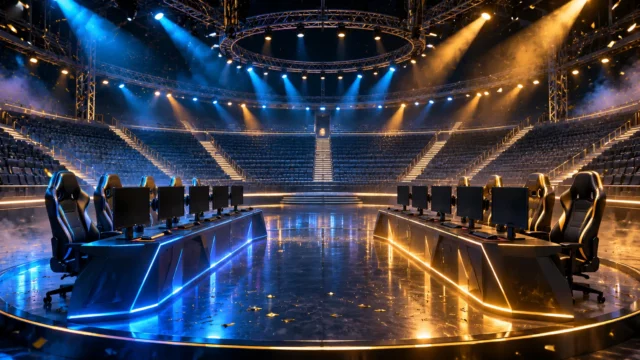
Counter-Strike fans can already mark two major dates on their calendars. IEM Beijing will return in 2027 and 2028, giving China’s capital a recurring place in international esports.
The decision follows a remarkable 2026 tournament that attracted 59,000 fans. However, this agreement goes beyond another successful event. It creates a longer-term foundation for competitive Counter-Strike in Asia.
IEM Beijing confirms its 2027 and 2028 tournament dates
The next two editions now have confirmed competition windows. Moreover, organizers have outlined arrival, media and departure dates for both tournaments.
The official ESL Pro Tour announcement, published November 17, 2026, confirms the following schedule:
- IEM Beijing 2027: November 1–7, 2027. Teams arrive October 30, attend media day October 31 and depart November 8.
- IEM Beijing 2028: October 21–29, 2028. Teams arrive October 19, attend media day October 20 and depart October 30.
The 2027 competition remains within its previously announced October–November window. Meanwhile, the 2028 schedule updates the October dates communicated earlier.
These dates give fans an early planning advantage. Nevertheless, venues, ticket information and other tournament details for both editions remain unconfirmed.
Record attendance in 2026 gives the agreement extra significance
The timing is particularly interesting because the latest tournament has already established a major attendance milestone.
IEM Beijing 2026 welcomed 59,000 fans across six days of live competition. That made it Asia’s largest standalone Intel Extreme Masters event to date.
The tournament ran from November 2–8 at Bloomage Biotech·Biohyalux ECM Arena. Its location was Wukesong, in Beijing’s Haidian District.
On the competitive side, MOUZ secured the championship by defeating The MongolZ in the grand final. Consequently, the edition delivered both a notable competitive result and record attendance.
Those figures offer important context for the new agreement. Beijing has already demonstrated substantial spectator interest, rather than relying solely on expectations about future growth.
However, attendance alone cannot guarantee similar results every year. The next challenge involves maintaining that momentum across consecutive editions.
IEM Beijing gains a three-year foundation for local esports growth
ESL FACEIT Group has signed a framework cooperation agreement with the Beijing Esports Industry Development Association. It covers three annual editions, running from 2026 through 2028.
The agreement was signed during the 2026 tournament. Furthermore, the Association will help establish ongoing organizational support, backed by relevant Beijing municipal authorities.
According to EFG, the partnership positions China’s capital as Counter-Strike’s new home in Asia.
Marc Winther, EFG’s Director Esports Counter-Strike 2, emphasized the enthusiasm Chinese audiences have consistently shown.
He also highlighted a practical benefit of the agreement. A predictable annual event gives local teams, talent and commercial partners greater stability.
Winther additionally expressed appreciation for the Association and Beijing’s support.
Meanwhile, Association Secretary General Zhang Yuhao described the partnership as progress toward Beijing becoming an international esports hub.
He confirmed the organization’s commitment to comprehensive support throughout the three-year period.
A recurring Asian tournament could strengthen Counter-Strike’s calendar
One important distinction separates this announcement from a typical tournament confirmation. Organizers are establishing continuity across multiple seasons, rather than announcing another isolated competition.
For spectators, that means knowing when a major international event is expected to return. For local participants, recurring tournaments can provide clearer opportunities for long-term preparation.
There is also a broader regional perspective. The 2026 Counter-Strike 2 Major in Singapore illustrates another major competitive event taking place in Asia.
However, these competitions have different organizers and arrangements. Beijing’s agreement specifically concerns Intel Extreme Masters and its annual presence in the Chinese capital.
Crucially, the partnership does not confirm future team invitations, prize pools or competition formats. Those details must await further announcements.
ESL has indicated that additional information about the 2027 and 2028 calendars will follow.
Ultimately, IEM Beijing now has something beyond its 2026 attendance record: a confirmed future. The next two editions will test how that continuity translates into lasting regional momentum.

A Fortnite player since the very first storm: I jump off the Battle Bus with a plan (that rarely survives the landing), build faster than I think and never miss a live event on the island. Here I bring you every new season, collab and secret before the storm closes in.


