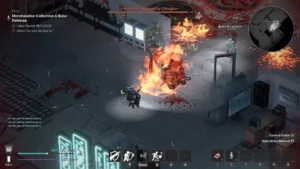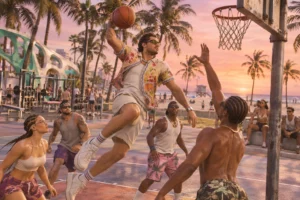



Millions of players are discovering Vice City, but some of the people sharing that experience have encountered an unexpected obstacle. GTA 6 Content ID claims began affecting YouTube creators during the game’s opening weekend, with gameplay videos mistakenly linked to a Colombian musician. The incident raises a bigger question: how can a platform distinguish original gaming coverage from material that genuinely belongs to someone else?
Grand Theft Auto VI launched on November 19, 2026, for PS5 and Xbox Series X|S. Since then, YouTube and Twitch have hosted nonstop broadcasts of Rockstar Games’ latest release. Yet just three days after launch, an automated copyright problem disrupted that celebration.
Why GTA 6 Content ID claims became a launch-week problem
On Sunday, November 22, numerous YouTube creators began receiving copyright claims associated with Colombian reggaeton artist Frank “El Santo”. His real name is Andrés Mauricio Arango Flórez, and he was born in Medellín.
The unusual part was the material involved. The artist had broadcast his own GTA 6 gameplay session on his YouTube channel, which also hosts his official music videos. That gameplay recording subsequently became a reference for YouTube’s automated copyright-matching system.
As a result, other creators uploading or streaming footage from the same game were being identified as matches. Popular channels including theRadBrad, with approximately 14.1 million subscribers, and HollowPoiint, with around 5.2 million, were affected. Smaller gaming creators also encountered claims.
The timing made the problem particularly significant. YouTube had already celebrated Rockstar’s release with a global 24-hour GTA 6 livestream event. Now, during the same launch period, its copyright technology was creating difficulties for people publishing their own gameplay.
How GTA 6 Content ID claims confused gameplay with ownership
The central issue was not that multiple creators were playing Grand Theft Auto VI. That is exactly what happens when a major game arrives. Instead, the problem concerned how an automated system interpreted similarities between separate recordings.
According to YouTube’s official explanation of Content ID, copyright owners can supply reference files containing protected audio or visual material. Uploaded videos are then compared against those files to identify potential matches.
Depending on the applicable settings, a successful match can lead to three different outcomes: a video may be blocked, advertising revenue may be directed to the claimant, or its viewing statistics may be tracked.
However, a Content ID claim is not the same as a copyright strike. The GTA 6 incident involved automated claims, and there is no basis for describing the affected channels as having received copyright strikes.
What makes this situation especially revealing is the difference between recording a game and owning the underlying material. Two people can independently capture similar scenes, characters or locations from Rockstar’s open world. Visual similarity alone does not establish that one creator copied another.
Consequently, an automated reference system needs to distinguish between protected original material and footage that different players can legitimately produce during their own gaming sessions. This incident illustrates what can happen when that distinction fails.
The artist removed his video, but the claims continued
After viewers alerted Frank “El Santo” through his chat, he deleted the gameplay recording associated with the problem. Nevertheless, copyright claims continued arriving until YouTube’s team intervened.
His only public explanation came through a comment beneath the video before its deletion. The musician stated that he had not personally submitted any copyright claims and attributed the situation to YouTube’s automated Content ID system.
Some social media users have questioned whether the incident was intentional. However, there is no evidence supporting that accusation. The available information does not establish deliberate wrongdoing by the artist, and speculation should not be confused with verified facts.
Following YouTube’s intervention, HollowPoiint thanked the platform on X for resolving the problem quickly. At the same time, he argued that a better system was needed to prevent comparable situations.
That response captures an important distinction. Fixing individual claims addresses the immediate disruption, but it does not necessarily eliminate the underlying risk of similar matches occurring again.
What this copyright mistake means for GTA 6 creators
For established YouTubers, an unexpected claim can complicate the publication of videos prepared for a highly competitive launch window. For smaller channels, the potential consequences may be even more frustrating, particularly when they depend on new releases to attract an audience.
Battle4Play recently covered how Ibai helped a GTA 6 streamer grow from zero to 3,243 concurrent viewers. That story demonstrated how a blockbuster launch can create opportunities for relatively unknown creators.
However, visibility is only one part of the equation. Creators also need confidence that independently recorded footage will not be incorrectly attributed to another uploader.
There is another useful comparison. A separate GTA 6 PlayStation suspension controversy involving an in-game photograph showed how content permitted inside Rockstar’s game can still encounter restrictions when shared through an external platform.
Although these situations involve different policies, both highlight the same broader challenge: playing a game and distributing material from that game are governed by different systems. Players may understand the rules of GTA 6 perfectly well while remaining unaware of the restrictions imposed by YouTube or PlayStation.
For YouTube creators concerned about future claims, checking copyright notifications carefully and using the platform’s established dispute process when appropriate remains more useful than assuming every automated match is a legitimate infringement.
Nevertheless, the responsibility cannot rest entirely with individual uploaders. Automated enforcement becomes particularly complicated when millions of people are recording the same virtual environments. Systems designed to protect original work also need safeguards against incorrectly identifying independently created gameplay.
Ultimately, GTA 6 Content ID claims have exposed a problem that extends beyond Rockstar’s latest blockbuster. YouTube resolved this particular incident, but the broader question remains: can automated copyright protection keep pace with a gaming culture built around sharing the same worlds through millions of different perspectives?

A Fortnite player since the very first storm: I jump off the Battle Bus with a plan (that rarely survives the landing), build faster than I think and never miss a live event on the island. Here I bring you every new season, collab and secret before the storm closes in.